After Hormuz, Here’s Why the Red Sea Is Now the World’s Most Vulnerable Shipping Route
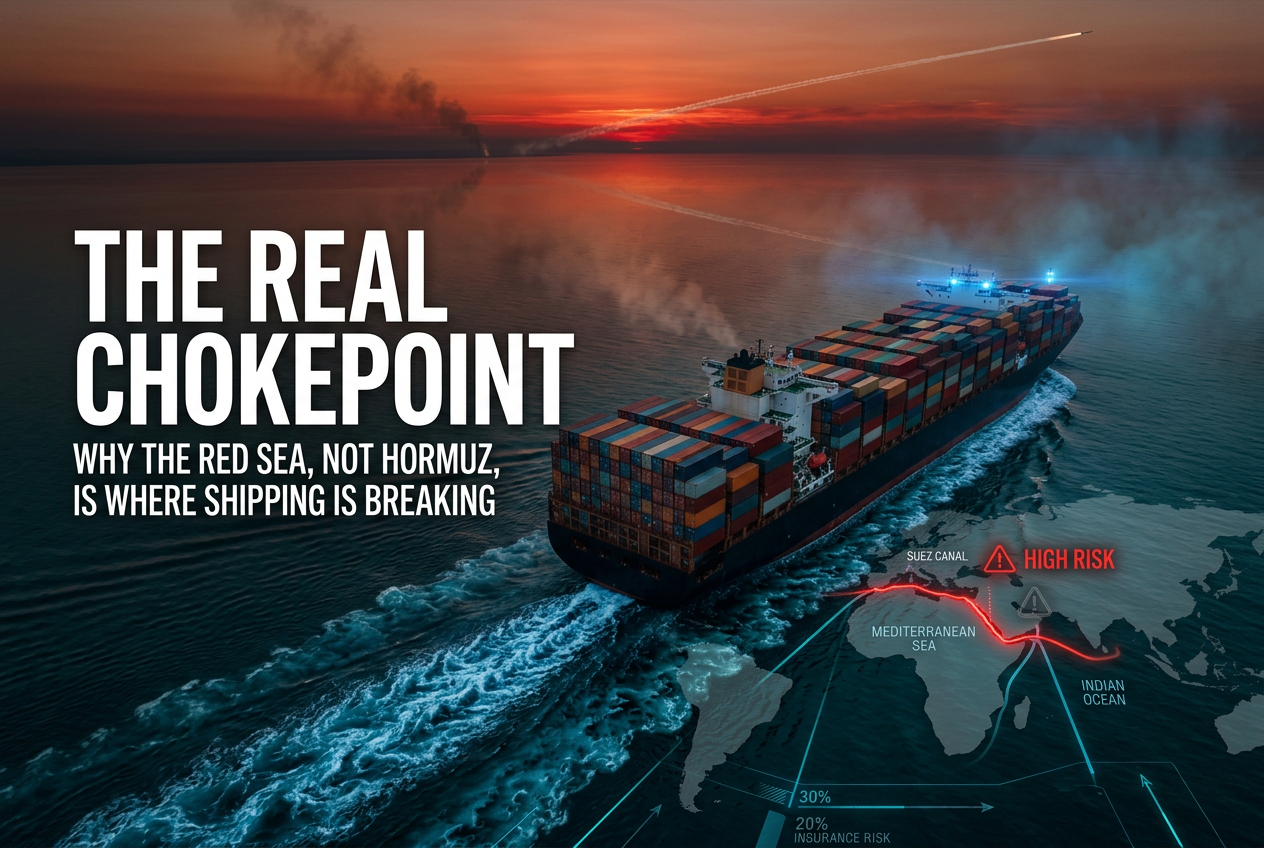
{"title":"Everyone Watched Hormuz. The Red Sea Is Where Shipping Actually Broke.","body":"gCaptain's analysis makes the case plainly: after months of attention fixed on the Strait of Hormuz as the chokepoint that could disrupt global shipping, it's the Red Sea that has become the world's most vulnerable maritime route. The piece frames this as a shift in where real operational risk sits, distinct from where headlines and war-risk premiums have been pointed.\n\nThis is a familiar failure mode in supply-chain risk management: institutions and insurers price the threat everyone is already talking about, while the actual disruption migrates to the corridor that got less attention. Hormuz has decades of geopolitical scrutiny, naval presence, and contingency planning built around it because it's the textbook chokepoint. The Red Sea, by contrast, became a live-fire problem more recently and faster than shipping insurers, rerouting protocols, and procurement teams could fully adjust to — which is exactly why it's now the softer target. Whenever a corridor becomes the "obvious" risk, capital and planning flow there, and the next disruption shows up wherever that attention isn't.\n\nThe SAL read: if your supply chain risk model still treats Hormuz as the headline threat and the Red Sea as a secondary line item, you're planning for last year's chokepoint — rerun your routing and insurance assumptions against the corridor that's actually degraded, not the one that's merely famous."}