The Ships Nobody Watches Are the Ones That Actually Move the War Machine
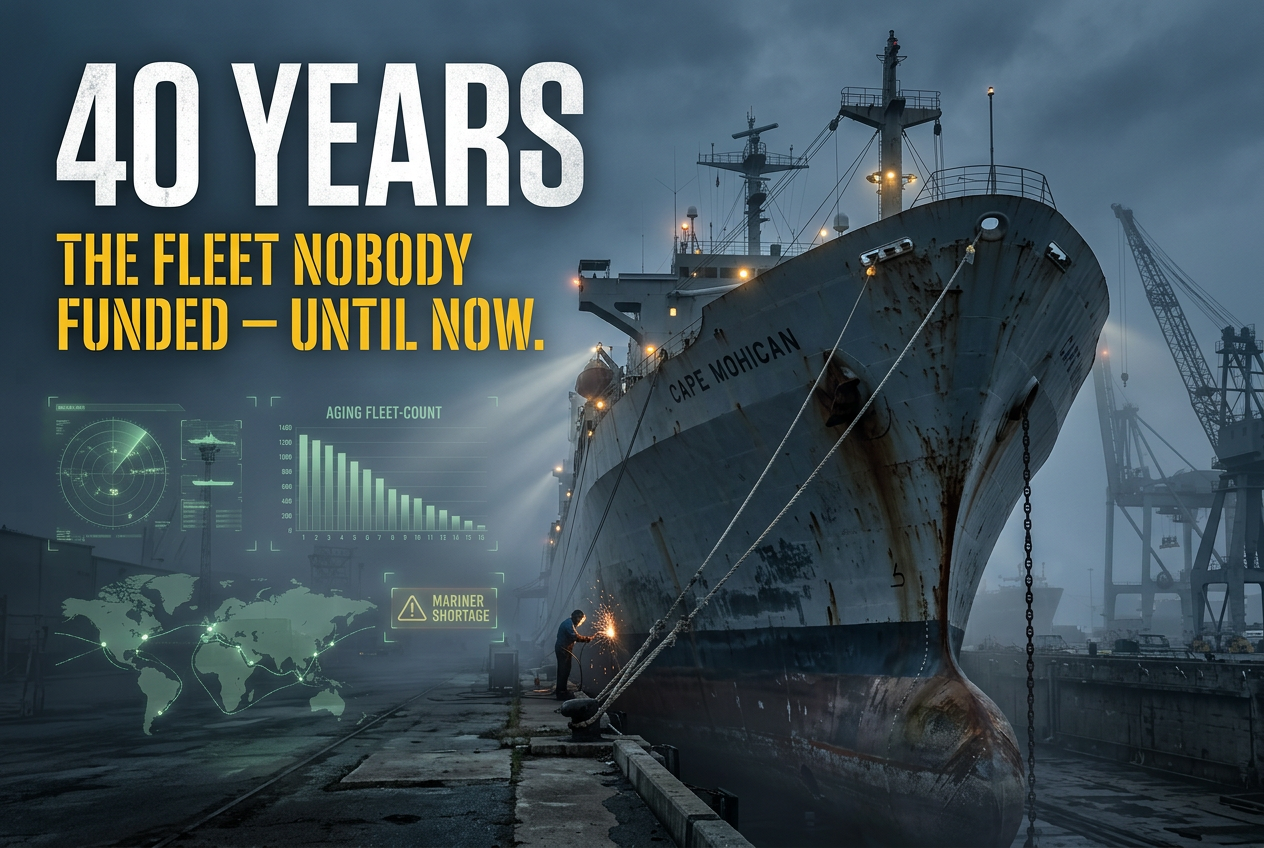
gCaptain's latest dispatch makes a simple point that Washington keeps forgetting between crises: the U.S. merchant marine — the civilian-crewed fleet that hauls military cargo, fuel, and equipment during any real mobilization — has been quietly shrinking for decades, and the country is only now starting to notice the mariners who'd have to answer the call if a major conflict required sealift at scale.
This is the oldest pattern in American strategic planning: the capability that only matters in a crisis gets funded like it never will be one. The U.S. flagged fleet, the mariner pipeline, the aging Ready Reserve Force — all of it has been treated as a cost center for forty years, right up until someone runs the numbers on what a Taiwan contingency or a major NATO resupply would actually require and discovers the ships and crews aren't there in the quantities assumed. Shipbuilding, seafaring labor, and merchant marine academies are infrastructure in the same category as ports and rail — invisible until the day they're the bottleneck, at which point rebuilding them takes years, not months.
The SAL read: if your business touches ocean freight, defense logistics, or shipbuilding supply chains, treat renewed federal attention to the merchant marine as an early signal — not a nostalgia piece — that sealift capacity and mariner shortages are about to become a funding and policy priority, and the companies positioned in that value chain now will be the ones holding contracts when the money actually moves.