India's Refiners Are Quietly Rewiring Their Crude Map Around You
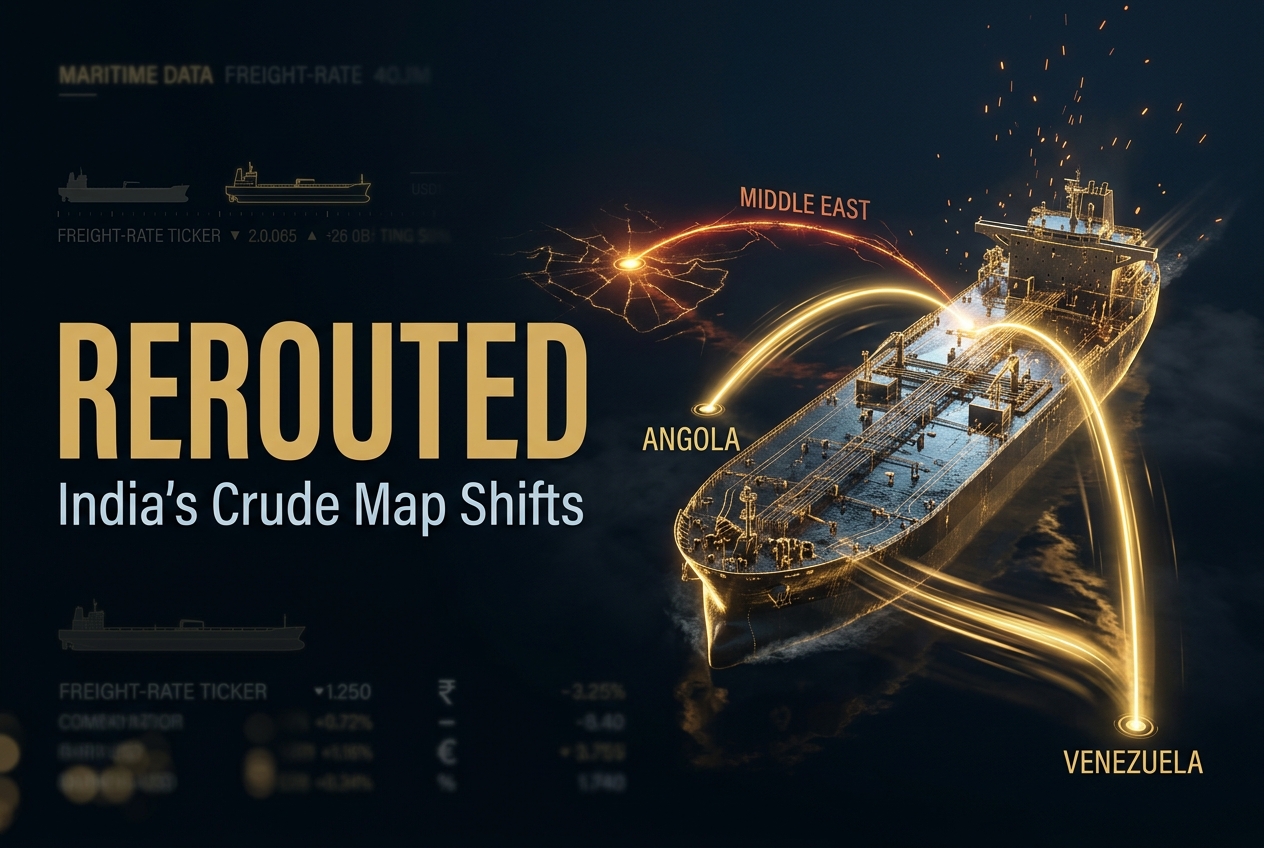
India's refiners are widening the net for crude, turning to Angola and Venezuela as Middle East supply tightens, according to OilPrice. This isn't a one-off purchase decision — it's a sourcing diversification move by the world's third-largest oil importer, one that reshapes tanker routes, freight rates, and who gets paid in what currency.
This is the same playbook every major importer runs when a primary supply corridor gets unreliable: spread the risk across geographically and geopolitically distant suppliers, even if it costs more in freight or complexity. India did this after Russian barrels became discounted-but-sanctioned goods; it's doing it again now with Gulf flows under pressure. The pattern matters because it signals that large buyers no longer trust single-region supply chains, full stop — and once that trust breaks, it rarely fully rebuilds even after the immediate crisis passes. Watch for Venezuela specifically: any meaningful uptick in its export volumes is itself a signal about sanctions enforcement loosening or being worked around. The SAL read: if your business has any exposure to freight, fuel costs, or input pricing tied to Middle East stability, the real move isn't watching oil prices — it's watching where the big importers are quietly rerouting, because that's the leading indicator six weeks before it hits your invoice.