Iran-Linked Tankers U-Turn, Zig-Zag as US Enforces Blockade
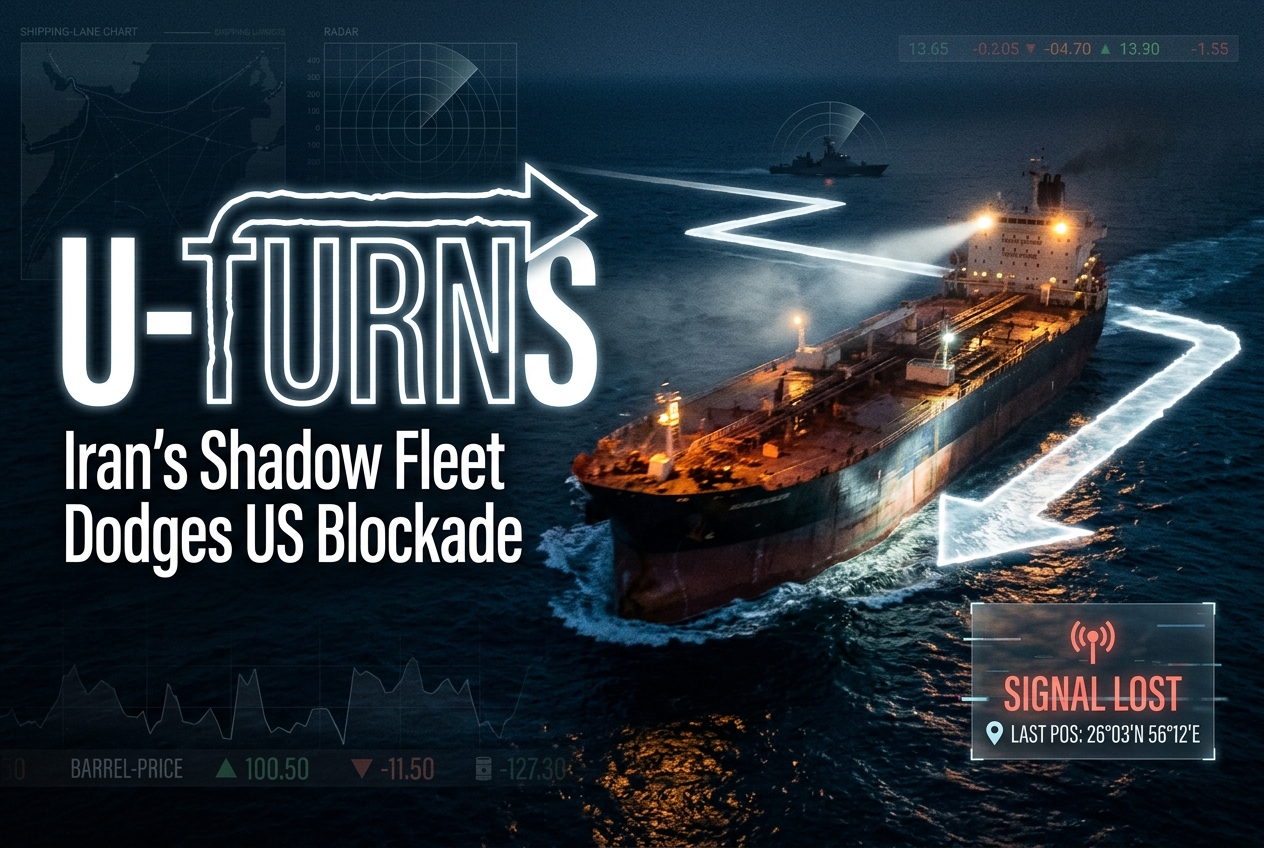
{"title":"Iran's Shadow Fleet Is Suddenly Very Bad at Going in Straight Lines","body":"Tankers linked to Iranian crude are reportedly making sudden U-turns and erratic zig-zag course changes as the US enforces a blockade, per gCaptain. The evasive maneuvering is the tell: vessels that normally run predictable routes to buyers are now behaving like ships actively trying not to be caught in the wrong place when enforcement assets show up.\n\nThis is the standard playbook for sanctioned shipping under pressure, and it has a predictable arc. Shadow fleets don't stop moving oil when enforcement tightens -- they get sloppier and more visible while they route around it: AIS transponders go dark, ships loiter offshore waiting for a signal it's clear, and captains take last-minute detours when a naval or Coast Guard asset gets close. The erratic tracks are a symptom of a system under real operational stress, not evidence that the trade has stopped. Historically this phase is temporary -- rates for compliant carriers spike, insurance and financing costs for the shadow fleet rise, and the oil eventually finds a workaround (ship-to-ship transfers, new flag registrations, longer routes) unless enforcement is sustained for months, not weeks.
The SAL read: if your business touches marine insurance, chartering, commodity trading, or Gulf-adjacent logistics, price in a volatility premium now -- shadow-fleet disruption tends to spike freight and insurance costs well before it changes actual oil flows.
}