Nigeria's Quiet Bid to Become West Africa's Power Broker
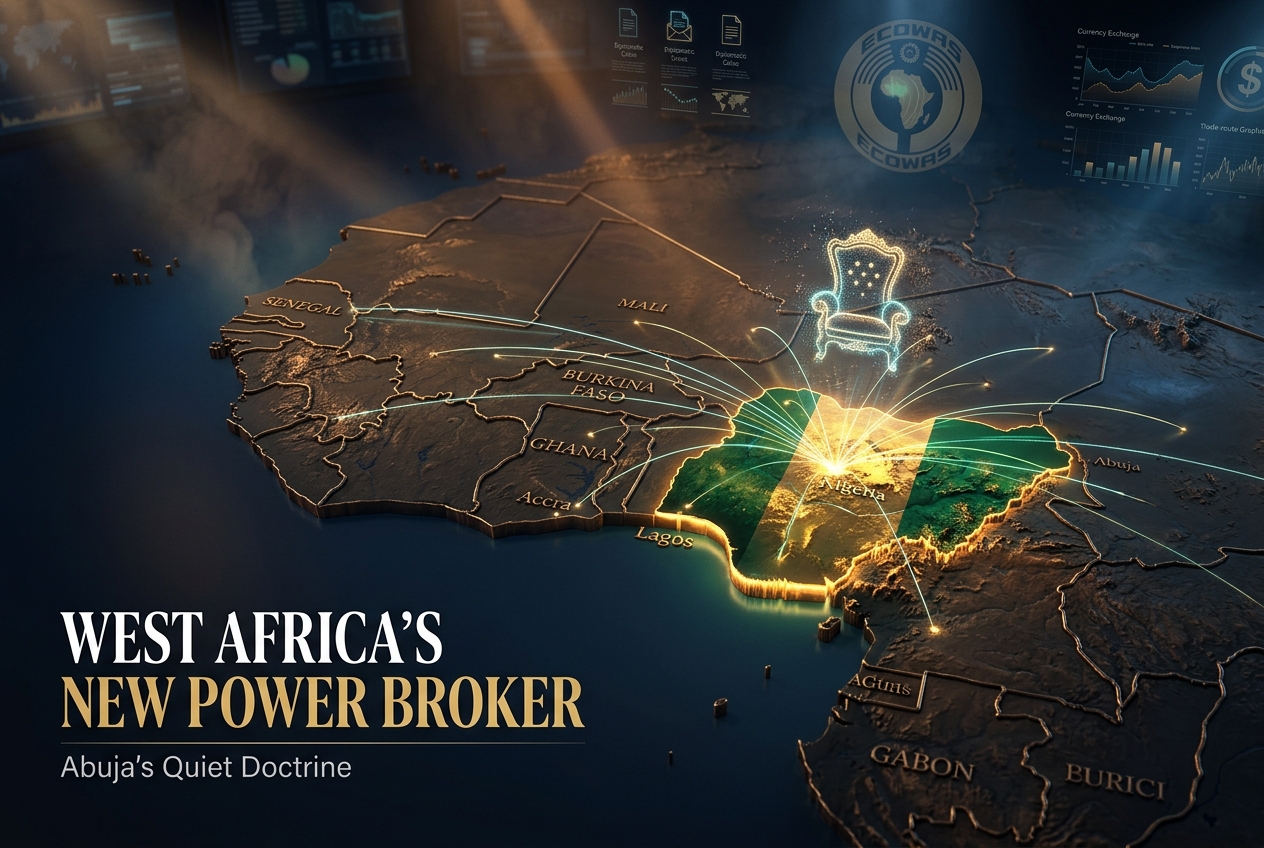
Foreign Policy reports that Nigeria is steadily building diplomatic weight across West Africa under President Bola Tinubu, a shift being framed as a deliberate doctrine rather than incidental influence. The piece frames this as a notable departure from the country's historically inward-facing posture, with Abuja positioning itself as a regional convener at a moment when the region's institutions are under strain.
This is the classic playbook for a mid-tier power seeking to punch above its weight: fill the vacuum left by retreating or distracted external actors, use economic and demographic scale as leverage, and convert regional convening power into a seat at bigger tables. It's the same logic that's driven Turkey, the UAE, and Indonesia to expand influence in their respective neighborhoods over the past decade -- diplomacy as a substitute for military or fiscal dominance, cheaper to project and harder to sanction. The pattern to watch is whether this translates into actual institutional weight -- brokered deals, security architecture, trade terms -- or stays rhetorical, which is the usual failure mode for these ambitions.
The SAL read: if you have operations, supply chains, or capital exposure anywhere in West Africa, Nigeria's regulatory and diplomatic preferences are about to matter more than they used to, so start treating Abuja as a policy counterparty, not just a market.