A Corn Ship Off Odesa Just Became a Casualty Statistic
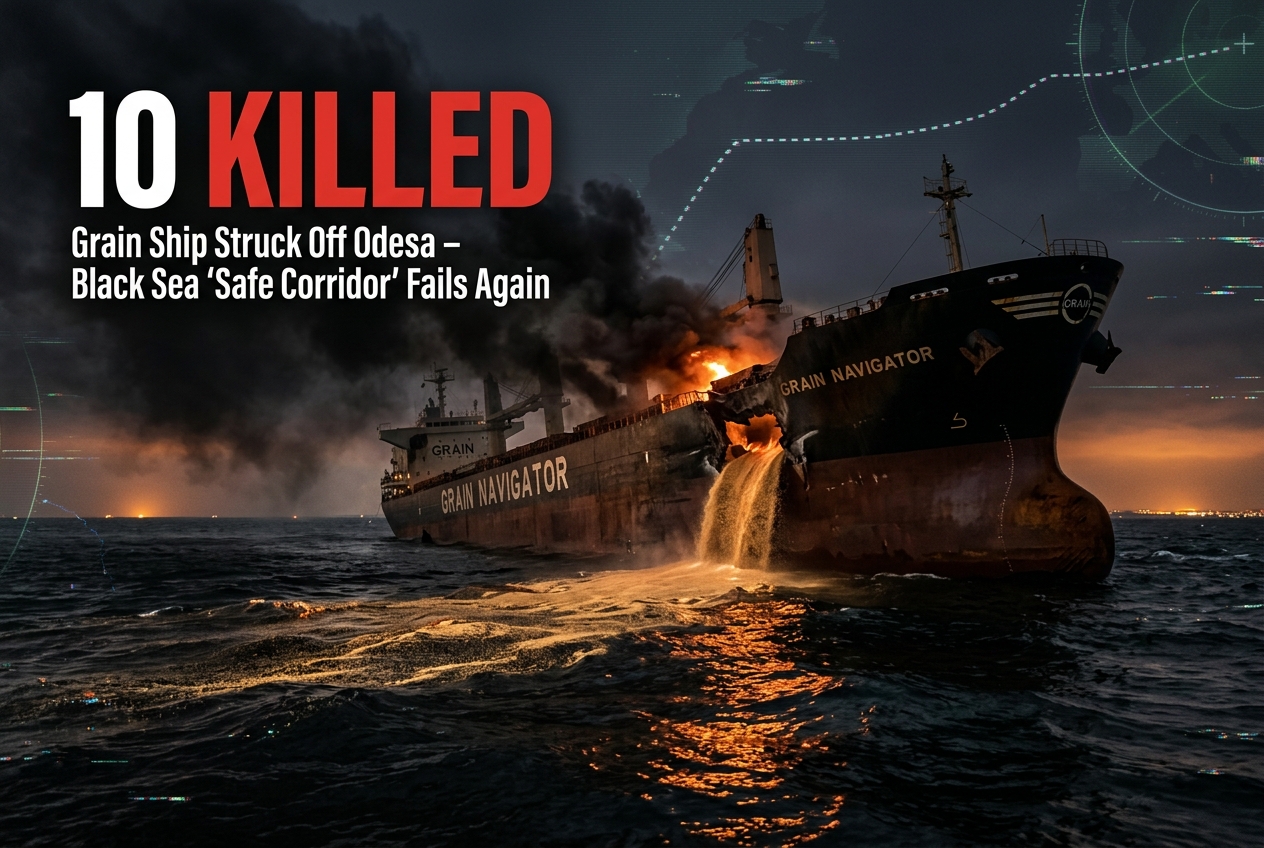
gCaptain reports a Russian attack on a corn-carrying vessel off Ukraine's Odesa killed ten people. The strike hit a commercial grain carrier, not a warship, in waters that Kyiv and its trading partners have spent three years trying to keep open for food exports.
This is the pattern that's defined Black Sea shipping since 2022: grain corridors get negotiated, insurers price in "safe passage," and then a missile or drone finds a merchant hull anyway. Every prior assurance -- the original grain deal, subsequent unilateral corridors, flag-state guarantees -- has eventually met a strike that reminds shippers the war doesn't recognize humanitarian carve-outs. War-risk premiums spike after events like this, crews get harder to recruit for these routes, and charterers quietly start routing around Odesa entirely, which is exactly the leverage this kind of attack is meant to create.
The SAL read: if your supply chain still assumes Black Sea grain routes are merely "elevated risk" rather than "live combat zone," your contingency plan is a document, not a strategy.