A Sanctioned 'Ghost Tanker' Is Now an Oil Spill Off Oman
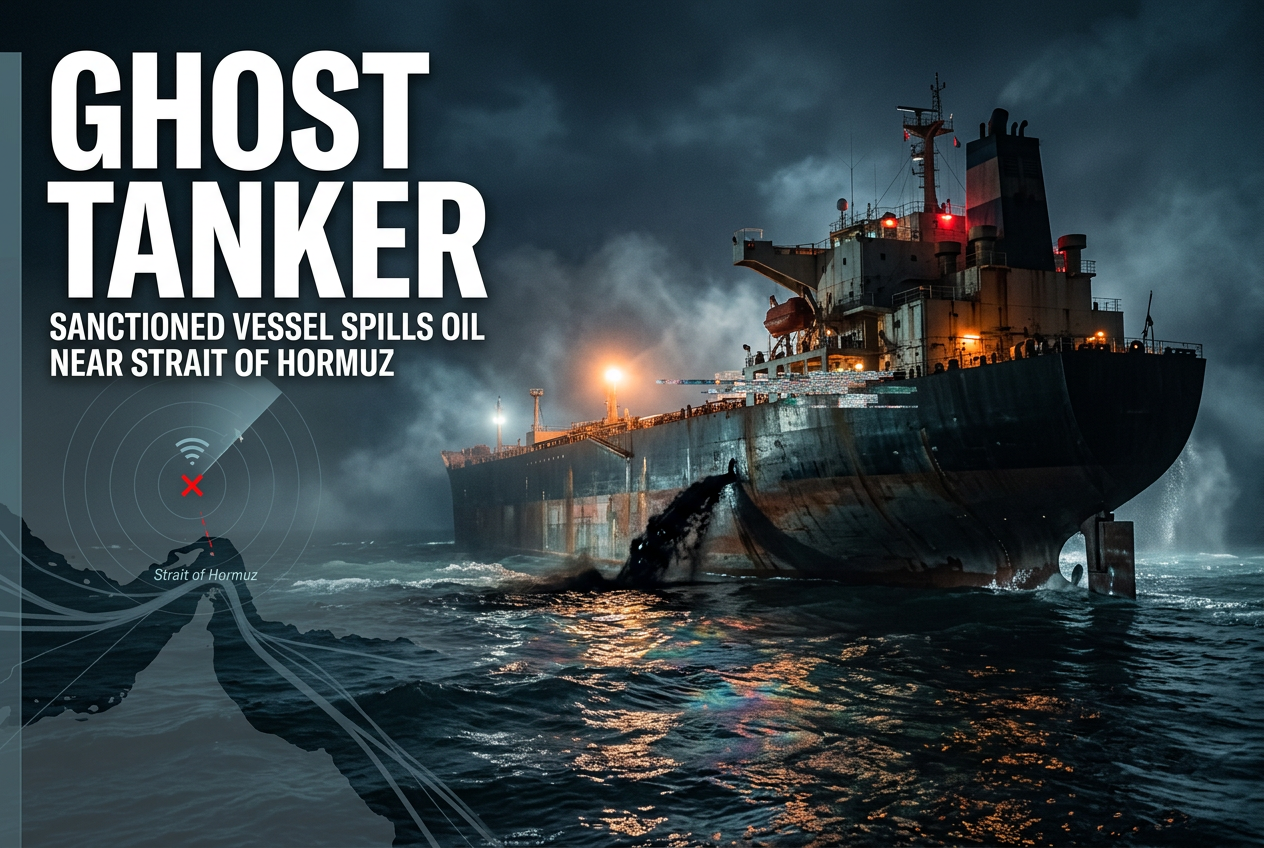
A sanctioned tanker is leaking oil near Oman, according to gCaptain. Beyond that headline, the specific vessel, cargo volume, and operator details aren't yet public -- but the core fact is a sanctioned ship, actively evading normal shipping oversight, now has an active spill on its hands in a strategically dense waterway near the Strait of Hormuz corridor.
This is the quiet cost of the shadow fleet economy that's built up around Russian, Iranian, and Venezolan crude since 2022. Sanctioned tankers routinely go dark on AIS, sail without proper P&I insurance, skip class society inspections, and get crewed and maintained on the cheap because no reputable insurer or flag state wants the exposure. That works fine for evading enforcement -- right up until something breaks. Nobody underwrites the cleanup, nobody's fast to claim responsibility, and coastal states are left holding the environmental and liability bag for a vessel that was never playing by the rules that make spill response fast in the first place. This is the same structural failure mode as the Pemex-adjacent spills and the Baltic ghost-fleet near-misses: sanctions succeed at rerouting trade, and fail at making the rerouted trade safe.
The SAL read: if your supply chain touches Gulf or Red Sea shipping lanes at all, treat any sanctioned-tanker incident as a leading indicator of insurance and routing chaos, not an isolated environmental story -- war-risk premiums and transit delays move faster than cleanup crews.