Iraq Is Trucking Oil Through Syria Because It No Longer Trusts the Strait
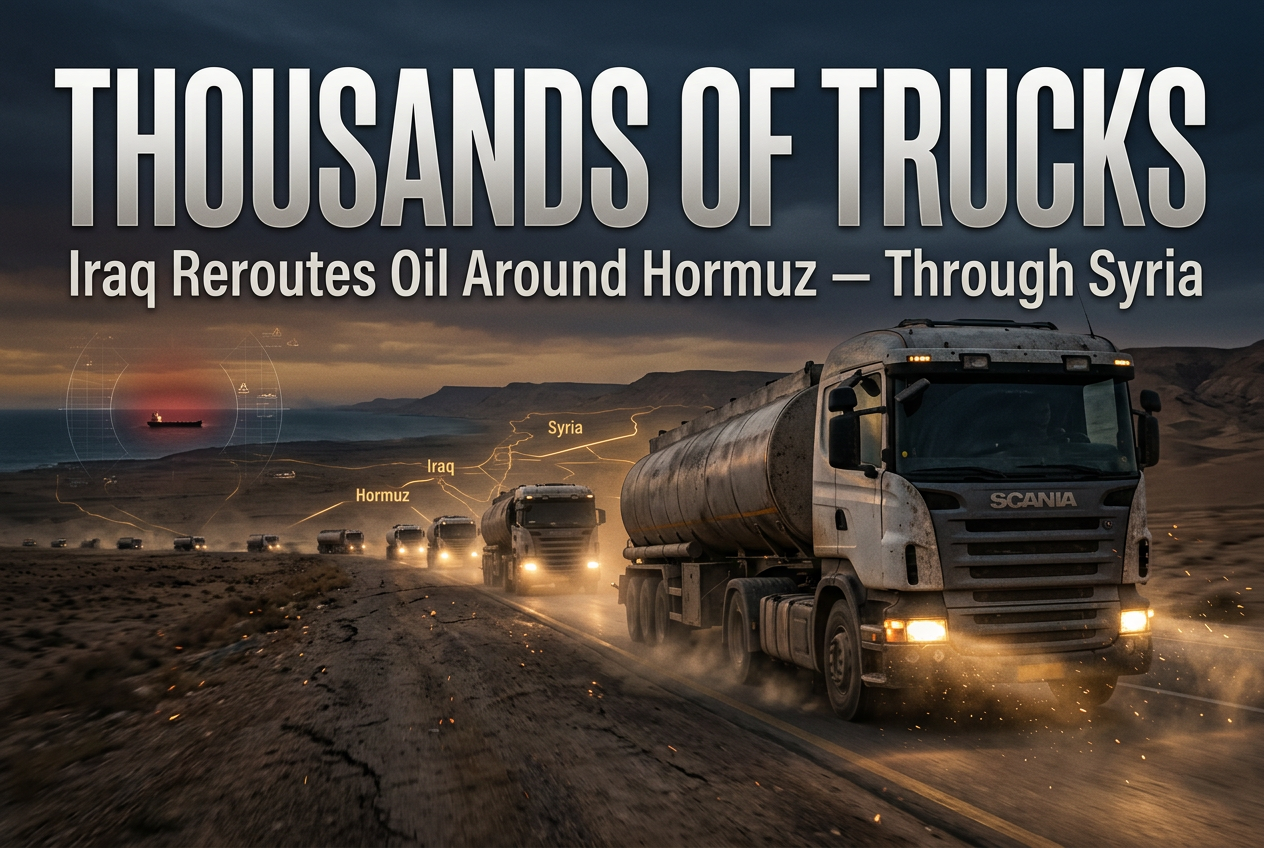
Thousands of trucks are now hauling Iraqi oil overland through Syria, according to gCaptain reporting, a workaround that has quietly become routine infrastructure rather than an emergency measure. The volume involved -- thousands of vehicles -- signals this isn't a pilot program or a one-off contingency; it's a functioning alternate export channel running in parallel to Iraq's traditional maritime routes through the Strait of Hormuz.
This is what chokepoint risk actually looks like once institutions stop treating it as theoretical. Hormuz has been a geopolitical tripwire for decades -- Iranian threats, tanker seizures, insurance spikes -- but the response has usually been rhetorical: warnings, naval deployments, diplomatic statements. Building out thousands of truck movements through Syria is different. It's capital and logistics committed to the assumption that the strait is not reliably available, which is a much stronger signal than any communique. When a producer starts routing physical barrels around a chokepoint rather than just insuring against it, that tells you the underlying risk calculus has permanently shifted -- and once that overland capacity exists, it doesn't get dismantled even if the strait stays open, because redundancy is now cheaper than trusting one route again.
The SAL read: if your supply chain, financing, or client base has any exposure to Gulf shipping lanes, the smart operators aren't waiting for a Hormuz closure to plan the workaround -- they're watching who's already building one.