Foreign Policy: US-China Ties Now Swing Faster Than Anyone Can Plan For
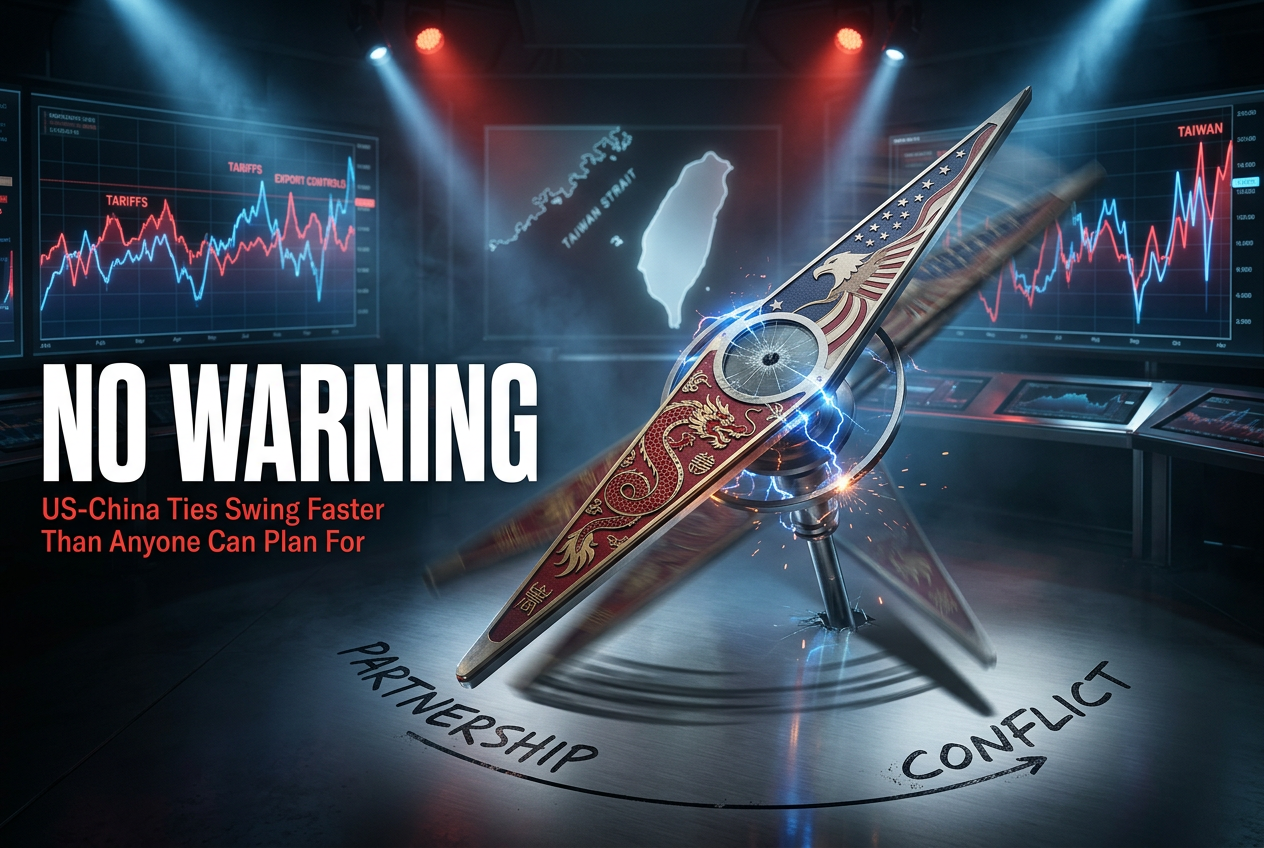
Foreign Policy's latest assessment frames the U.S.-China relationship as more volatile than at any point in recent memory -- not a steady cold war, but a rivalry punctuated by sudden partnership overtures, tariff threats, and Taiwan flashpoints that can flip within a single news cycle.
This is the defining pattern of great-power competition in the Trump-Xi era: neither side wants a clean break, both sides need leverage, and the result is a relationship that oscillates rather than settles. Previous cycles -- trade truces followed by export-control crackdowns, summit warmth followed by sanctions -- show this isn't drift toward stability or toward confrontation. It's a deliberate strategy of controlled unpredictability, where each side keeps the other guessing to extract concessions, and multinational business planning becomes collateral damage in the process.
The SAL read: if your supply chain, pricing, or hiring plan assumes six months of predictable U.S.-China conditions, you're planning for a relationship that no longer exists -- build scenario flexibility into contracts and sourcing now, not after the next whiplash.
Expect this volatility to keep showing up as sudden tariff announcements, export-control expansions, and Taiwan rhetoric spikes with little warning -- the smart move is treating U.S.-China exposure as a standing risk line item, reviewed quarterly, not an occasional headline to react to.