US, Iran Each Attack Infrastructure in Risky Escalation
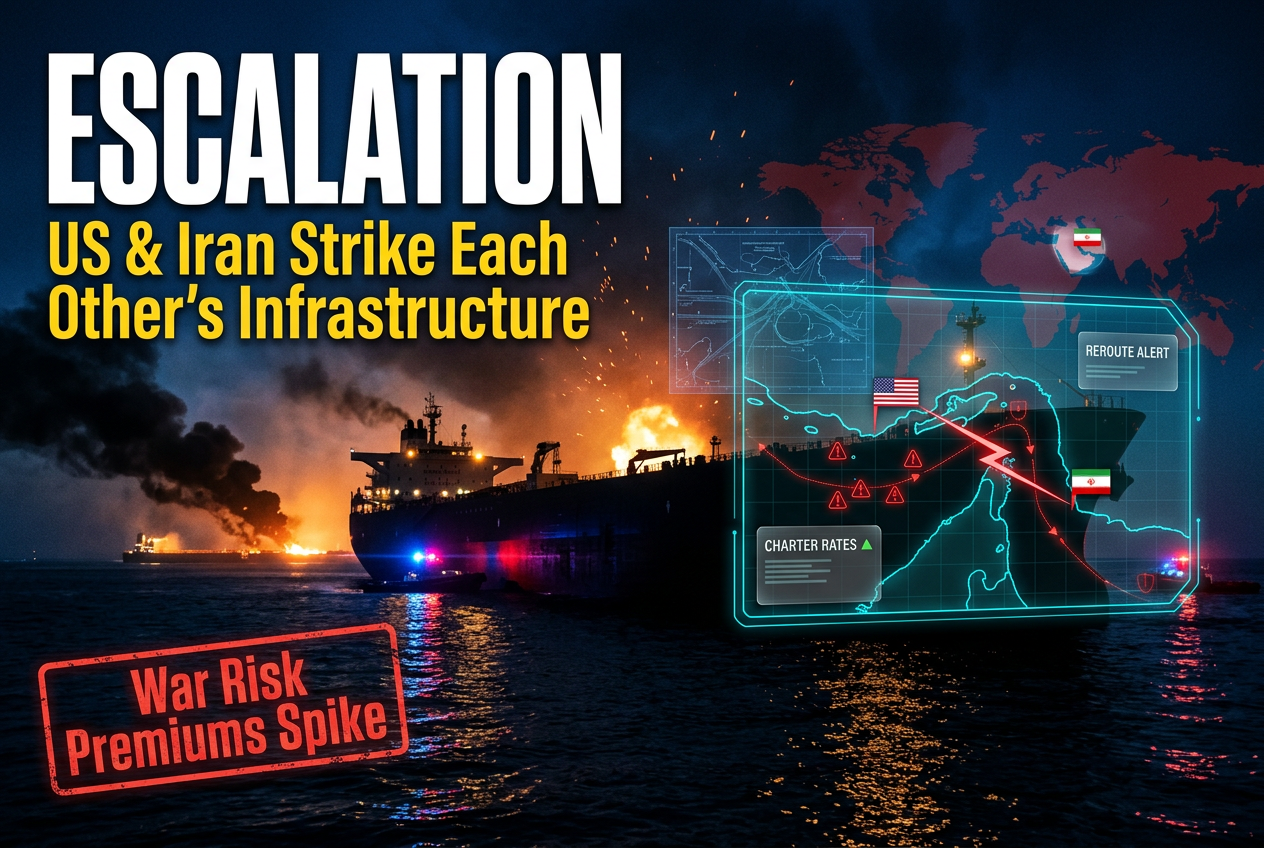
THE FACT: gCaptain is reporting that the US and Iran have each struck the other's infrastructure in what's being described as a risky escalation — the kind of tit-for-tat action that maritime and logistics watchers track closely because it doesn't stay contained to two governments. The details of scope and target remain thin in initial reporting, but the framing itself — "each attack infrastructure" — is the signal, not the noise. THE PATTERN: Infrastructure-for-infrastructure exchanges between the US and Iran have a well-worn script: a strike, a counter-strike, then weeks of elevated risk premiums in the Strait of Hormuz and Gulf shipping lanes before things either de-escalate or don't. The pattern that matters for operators isn't the strikes themselves — it's the second-order effect: war risk insurance surcharges spike, rerouting decisions get made in a hurry, and charter rates move before any formal notice reaches your inbox. This is the same choreography that's played out in prior Gulf flare-ups — and each time, the businesses caught flat-footed are the ones who treated