US Strikes Iran To ‘Punish’ It for Attack That Killed 2 Troops
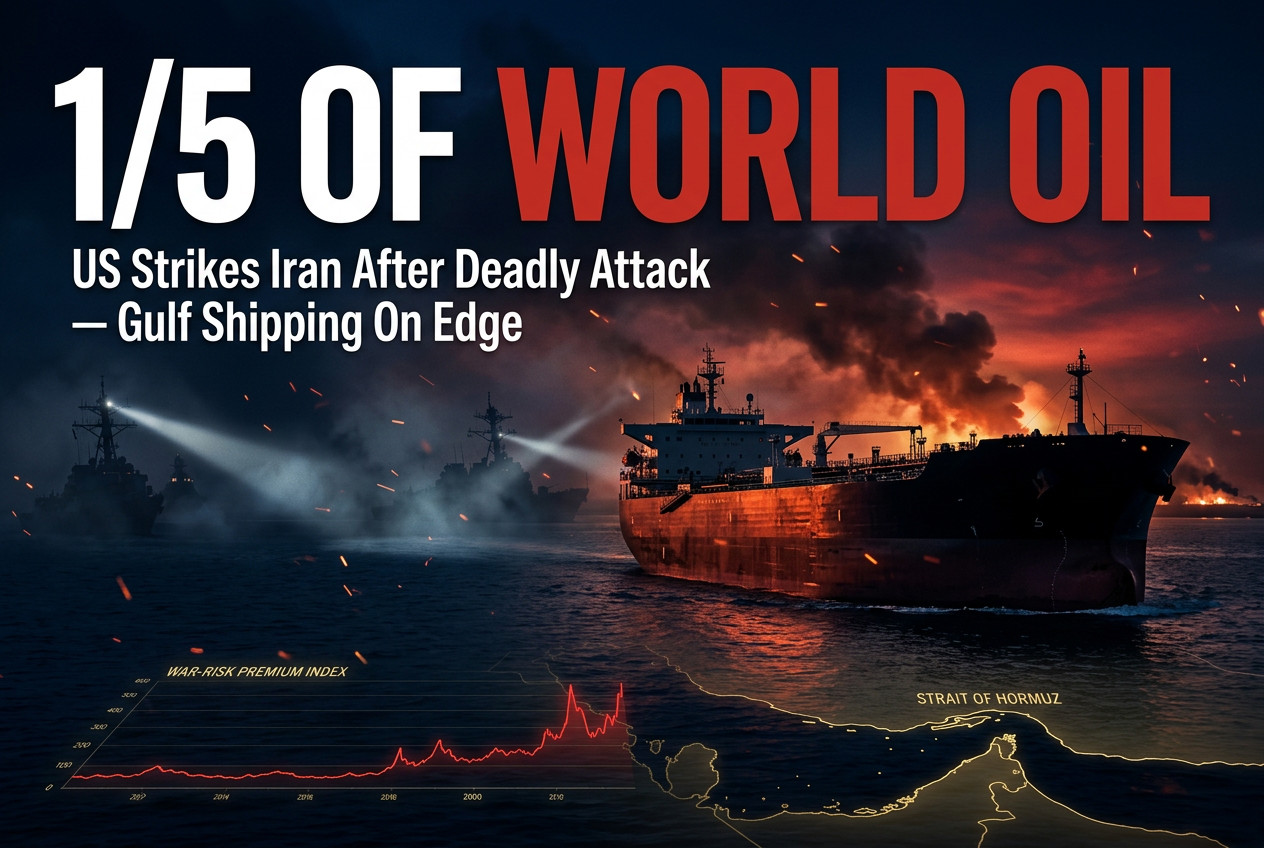
The fact, as reported: the US struck targets in Iran, framed by officials as punishment for an attack that killed two American troops. Gcaptain — a maritime trade outlet, not a general newswire — picked this up, which tells you where the first real-world consequences land: shipping lanes, not headlines.
This is the pattern that's played out every time Washington and Tehran trade blows for the past two decades: a retaliatory strike lands, Iran's response (rhetorical or kinetic) is uncertain for days, and in that window tanker owners, insurers, and charterers all reprice risk before anyone has clarity. War-risk premiums in the Gulf don't wait for de-escalation — they spike on the strike itself and only come down slowly, if the situation cools. The Strait of Hormuz carries roughly a fifth of global oil flow through a chokepoint Iran has demonstrated it can harass at will, and every prior escalation cycle — the 2019 tanker seizures, the 2020 Soleimani aftermath — produced