Air Force Puts a Second B-52 Back in the Radar-Testing Rotation
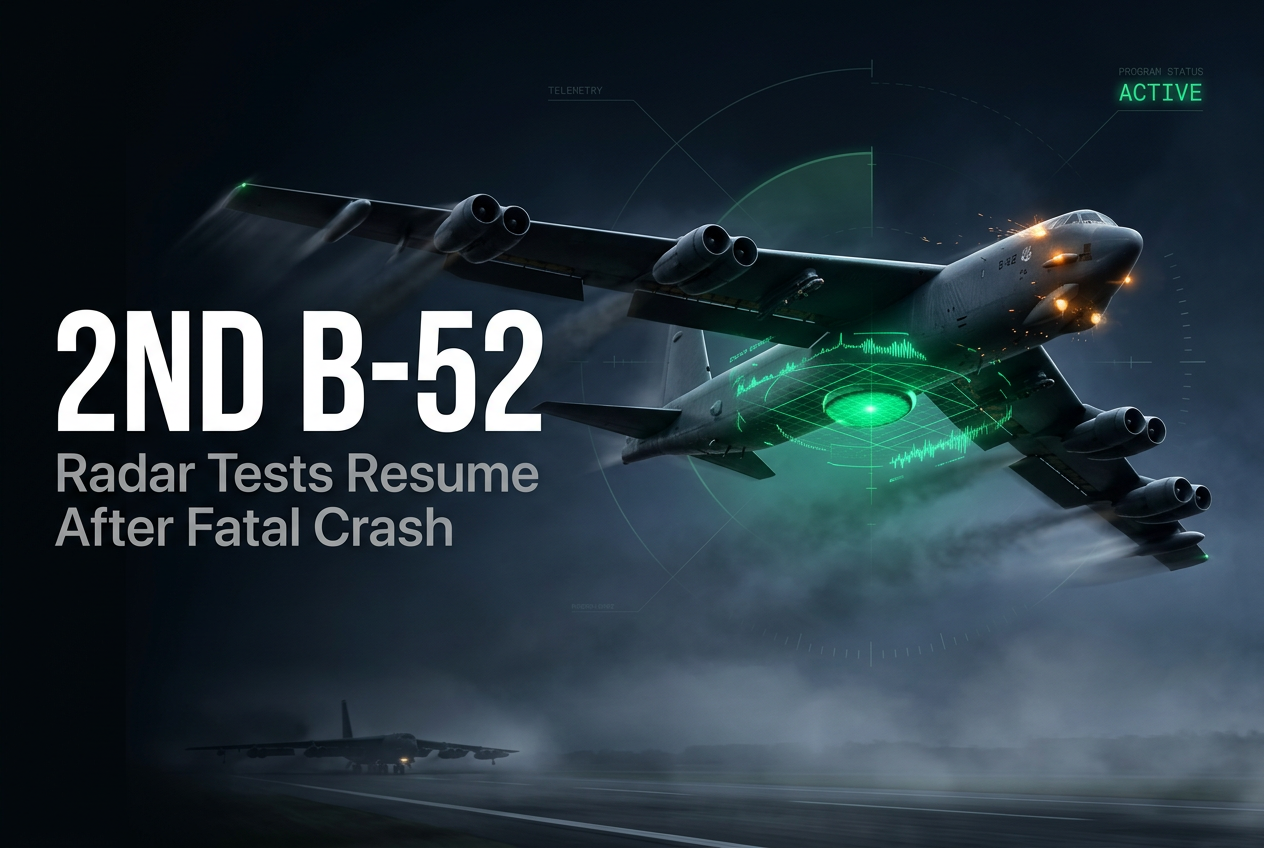
The Air Force is resuming B-52 radar testing with a second bomber after a fatal crash involving the program, keeping the radar upgrade schedule intact while a separate investigation runs in parallel, according to Defense One.
The Air Force is resuming B-52 radar testing using a second bomber, following a crash involving the program that killed personnel, according to Defense One. The service is moving forward with the test campaign rather than pausing the broader radar upgrade effort, swapping in another aircraft to keep the schedule intact.
This is the standard playbook after a military test-program fatality: isolate the incident to the specific airframe, keep the underlying program moving, and let a separate investigation run in parallel rather than halting the mission. It's how the Pentagon has handled mishaps across F-35, Osprey, and missile-defense test lines for years -- the logic being that modernization timelines (in this case, the B-52's radar overhaul, a linchpin of the bomber's extended service life) are considered too strategically important to freeze indefinitely, even after loss of life. The tradeoff is that root-cause findings often surface well after flight operations have already resumed, which is a bet regulators in almost no other industry get to make so openly.
The SAL read: when an institution keeps the program moving before the investigation closes, it's telling you the mission's timeline outranks the incident's answers -- which is exactly the kind of gap outside vendors, contractors, and oversight bodies should be pushing to close, not waiting on.
Frequently asked questions
Why is the Air Force resuming B-52 radar testing after a crash?
The Air Force is resuming the test campaign using a second bomber after a crash involving the program killed personnel, according to Defense One. Rather than pausing the broader radar upgrade effort, the service swapped in another aircraft to keep the test schedule intact.
What happened to the original B-52 in the radar test program?
A crash involving the B-52 radar test program killed personnel, according to Defense One. The article does not specify further details about the incident itself, focusing instead on the Air Force's decision to continue testing with a different aircraft.
Will there be an investigation into the B-52 crash?
Yes, a separate investigation is expected to run in parallel while flight testing continues, following the standard playbook used after military test-program fatalities. The article notes this approach often means root-cause findings surface well after flight operations have already resumed.
Why does the B-52 radar upgrade matter to the Air Force?
The B-52's radar overhaul is described as a linchpin of the bomber's extended service life, meaning it is central to keeping the aircraft in service longer. This strategic importance is why the Air Force is continuing the test campaign rather than freezing it after the fatal incident.
Is it normal for the military to keep testing after a fatal crash?
Yes, the article says this is the standard playbook after a military test-program fatality: isolate the incident to the specific airframe, keep the underlying program moving, and let the investigation run separately. It notes the Pentagon has handled mishaps this way across F-35, Osprey, and missile-defense test lines for years.
More from SOVEREIGN SIGNAL
- Houthis Hit Saudi Arabia, Red Sea Traffic Slows AgainEmpire Logistics
- A Week-Delayed Sinking Shows War Risk Doesn't End When the Shooting StopsEmpire Logistics
- Vietnamese Vessel Sinks in South China Sea, 17 MissingEmpire Logistics
- Germany wants more P-8 sub-hunters — because the sea floor got dangerousEmpire Logistics