Japan Just Told You What It Thinks the Strait of Hormuz Odds Really Are
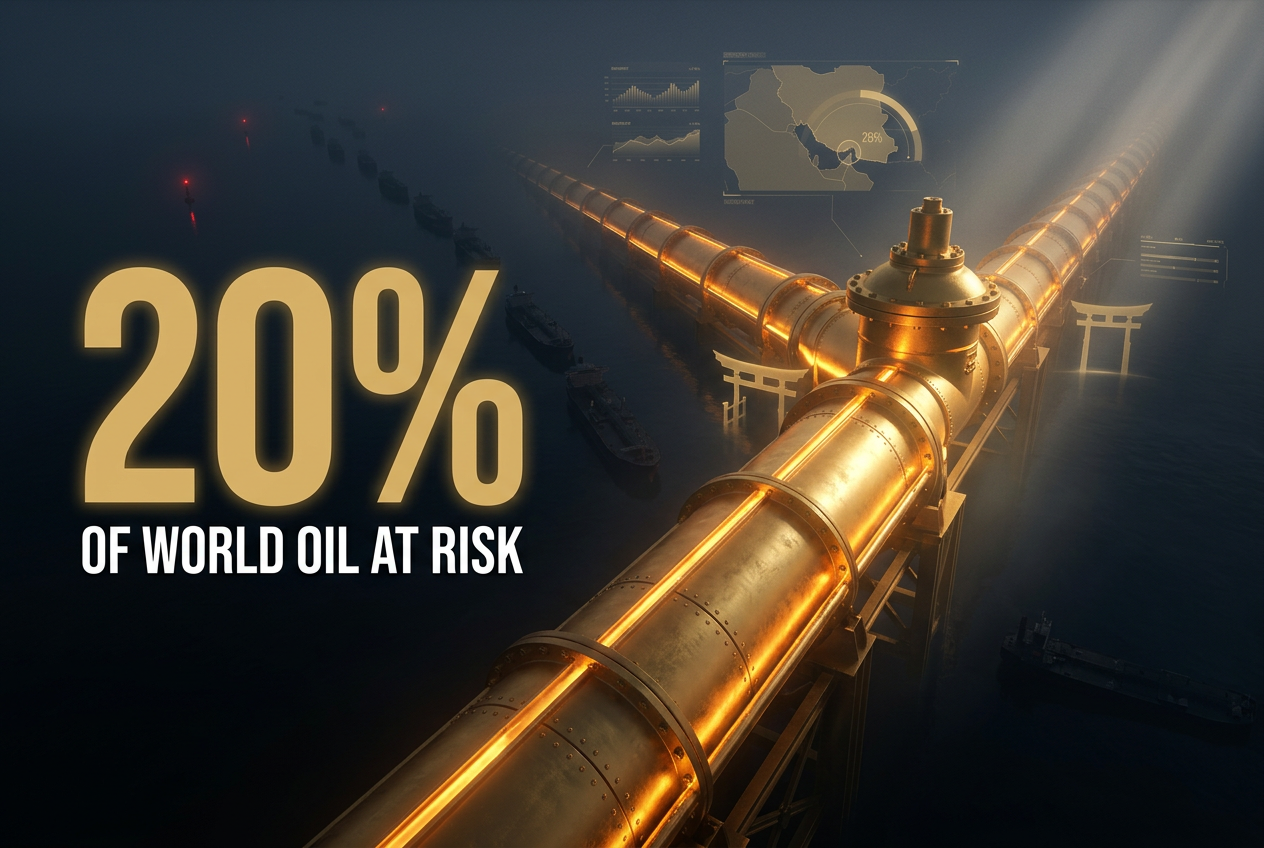
Japan is funding overseas oil pipeline projects to cut its dependence on the Strait of Hormuz, a proactive hedge that signals Hormuz risk has shifted from a tail-risk footnote to a baseline planning assumption for a G7 economy.
Japan is backing overseas oil pipeline projects specifically designed to reduce its dependence on the Strait of Hormuz, according to OilPrice. The move is a direct hedge against the chokepoint through which roughly a fifth of the world's oil and a large share of Japan's crude imports must pass.
This is what real risk pricing looks like when a government has skin in the game. Tokyo doesn't need a war to justify the spend -- it needs a probability. Nations with limited domestic energy resources have historically diversified supply routes only after a scare (the 1970s oil shocks, the 2019 tanker attacks), but funding pipeline alternatives now, without a triggering crisis in headlines, signals a quieter and more permanent recalculation: Hormuz risk has moved from tail-risk footnote to baseline planning assumption. Watch for insurers, shippers, and other import-dependent economies to follow the same logic on their own timelines.
The SAL read: when a G7 economy starts building around a chokepoint instead of just insuring against it, that's your cue to stress-test your own supply chain and energy-cost assumptions for a Hormuz disruption scenario you can't currently price in.
Frequently asked questions
Why is Japan backing overseas oil pipeline projects?
Japan is backing overseas oil pipeline projects specifically designed to reduce its dependence on the Strait of Hormuz, according to OilPrice. This is a direct hedge against the chokepoint through which roughly a fifth of the world's oil and a large share of Japan's crude imports must pass.
Is this move a reaction to a current crisis in the Strait of Hormuz?
No. The article notes that Tokyo doesn't need a war to justify the spend, only a probability. Funding pipeline alternatives now, without a triggering crisis in headlines, signals a quieter and more permanent recalculation rather than a panic response.
How have countries historically responded to Strait of Hormuz risk?
Nations with limited domestic energy resources have historically diversified supply routes only after a scare, such as the 1970s oil shocks and the 2019 tanker attacks. Japan's current move breaks that pattern by acting proactively before any new triggering crisis.
What does Japan's pipeline decision suggest about how Hormuz risk is being viewed now?
It signals that Hormuz risk has moved from a tail-risk footnote to a baseline planning assumption for a G7 economy. The article suggests this is what real risk pricing looks like when a government has skin in the game.
Should other countries or businesses expect similar moves?
The article says to watch for insurers, shippers, and other import-dependent economies to follow the same logic on their own timelines. It frames Japan's action as a cue for others to stress-test their own supply chain and energy-cost assumptions for a Hormuz disruption scenario they can't currently price in.
More from SOVEREIGN SIGNAL
- Argentina's Vaca Muerta Just Made Itself Impossible to IgnoreWealth Defense
- Hormuz Chokepoint Squeeze Is Already Showing Up in Your Grocery BillWealth Defense
- America's Gas Pipeline to the World Is Now a Geopolitical WeaponWealth Defense
- India's Refiners Are Quietly Rewiring Their Crude Map Around YouWealth Defense