$5B Refinery Bet: Betting the Next Chokepoint Won't Be Hormuz
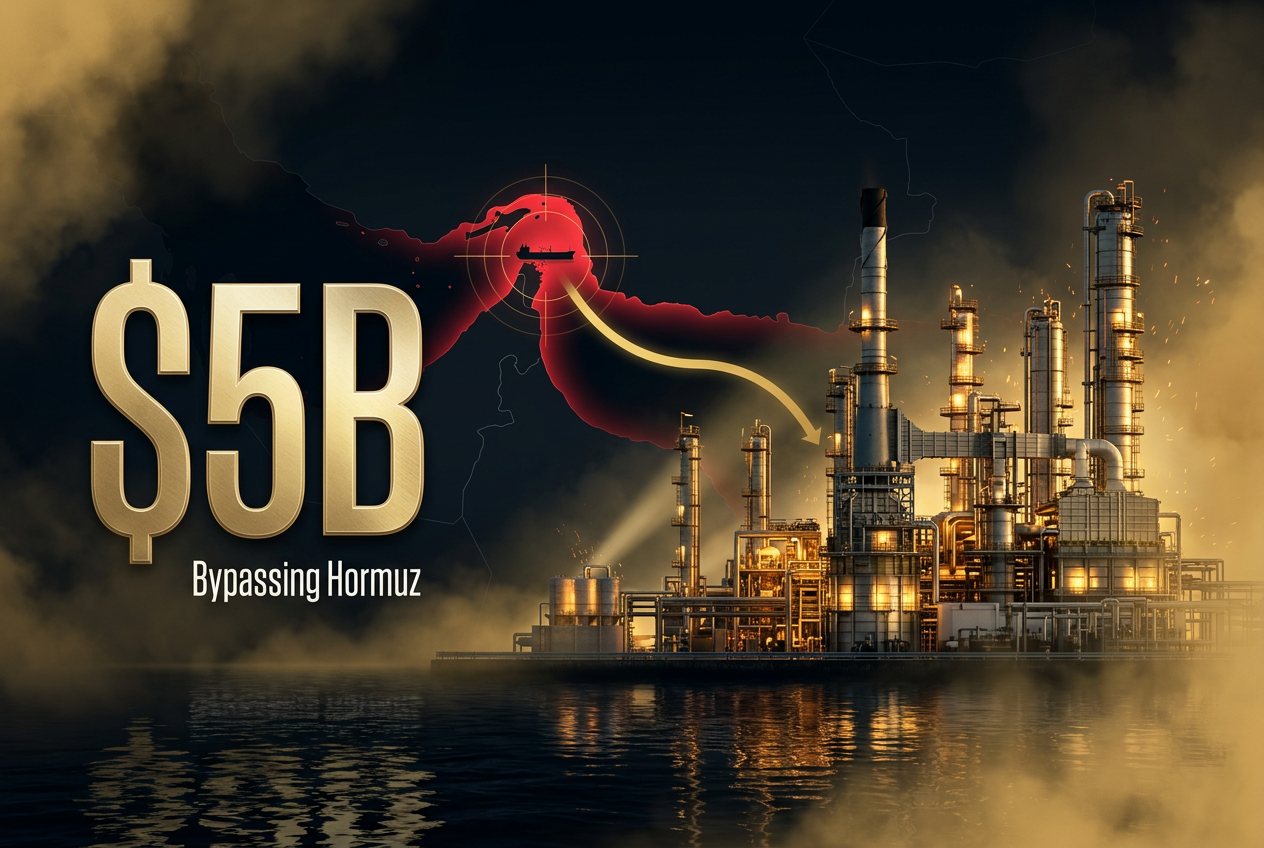
A U.S.-Saudi consortium is building a $5 billion refinery outside the Strait of Hormuz specifically to bypass that chokepoint, a move the article reads as serious capital pricing in Hormuz risk years ahead of any actual closure.
A U.S.-Saudi consortium is planning a $5 billion refinery on the Gulf coast built specifically to sit outside the Strait of Hormuz, according to OilPrice. The project's entire value proposition is geographic: refined product that can move without transiting the world's most surveilled and most threatened maritime chokepoint.
This is the same logic that's driven pipeline bypasses, alternate export terminals, and diversified shipping routes for decades whenever a chokepoint becomes a liability instead of just a convenience. Capital doesn't wait for a closure to happen — it prices in the probability years ahead, and $5 billion committed to a bypass location is itself a signal about how seriously serious money now rates Hormuz risk. It also tells you something about the durability of Gulf state strategy: Saudi capital hedging Saudi geography, building redundancy into a system the kingdom can't fully control, in partnership with U.S. money that wants the same insurance.
The SAL read: when the people closest to a chokepoint start paying billions to route around it, that's a clearer risk signal than any analyst note — and any business exposed to Gulf-transiting energy, freight, or insurance costs should treat this as an early marker to start building its own alternate routing now, not after the next crisis repricing hits.
Frequently asked questions
What is the $5 billion Gulf refinery project?
It's a planned refinery on the Gulf coast backed by a U.S.-Saudi consortium, according to OilPrice. The project is built specifically to sit outside the Strait of Hormuz, so refined product can move without transiting that maritime chokepoint.
Why does the refinery's location outside Hormuz matter?
The Strait of Hormuz is the world's most surveilled and most threatened maritime chokepoint. By locating the refinery outside it, the consortium avoids that transit risk entirely, which is the project's entire value proposition according to the article.
Is this the first time capital has moved to bypass a chokepoint?
No. The article notes this follows the same logic that has driven pipeline bypasses, alternate export terminals, and diversified shipping routes for decades whenever a chokepoint stops being just a convenience and becomes a liability.
What does this $5 billion bet signal about Hormuz risk?
A $5 billion commitment to a bypass location is itself a signal of how seriously serious money now rates Hormuz risk. The article argues that when the people closest to a chokepoint start paying billions to route around it, that's a clearer risk signal than any analyst note.
Who is behind the refinery investment?
The project is a partnership between a U.S.-Saudi consortium, combining Saudi capital hedging Saudi geography with U.S. money seeking the same insurance. The article frames this as Gulf states building redundancy into a system the kingdom can't fully control.
What should businesses exposed to Gulf energy risk do in response?
The article advises any business exposed to Gulf-transiting energy, freight, or insurance costs to treat this refinery bet as an early marker and start building its own alternate routing now, rather than waiting until after the next crisis repricing hits.
More from SOVEREIGN SIGNAL
- Japan Just Told You What It Thinks the Strait of Hormuz Odds Really AreWealth Defense
- Argentina's Vaca Muerta Just Made Itself Impossible to IgnoreWealth Defense
- Hormuz Chokepoint Squeeze Is Already Showing Up in Your Grocery BillWealth Defense
- America's Gas Pipeline to the World Is Now a Geopolitical WeaponWealth Defense