Freight Rates Are Climbing -- Nobody Can Agree Why
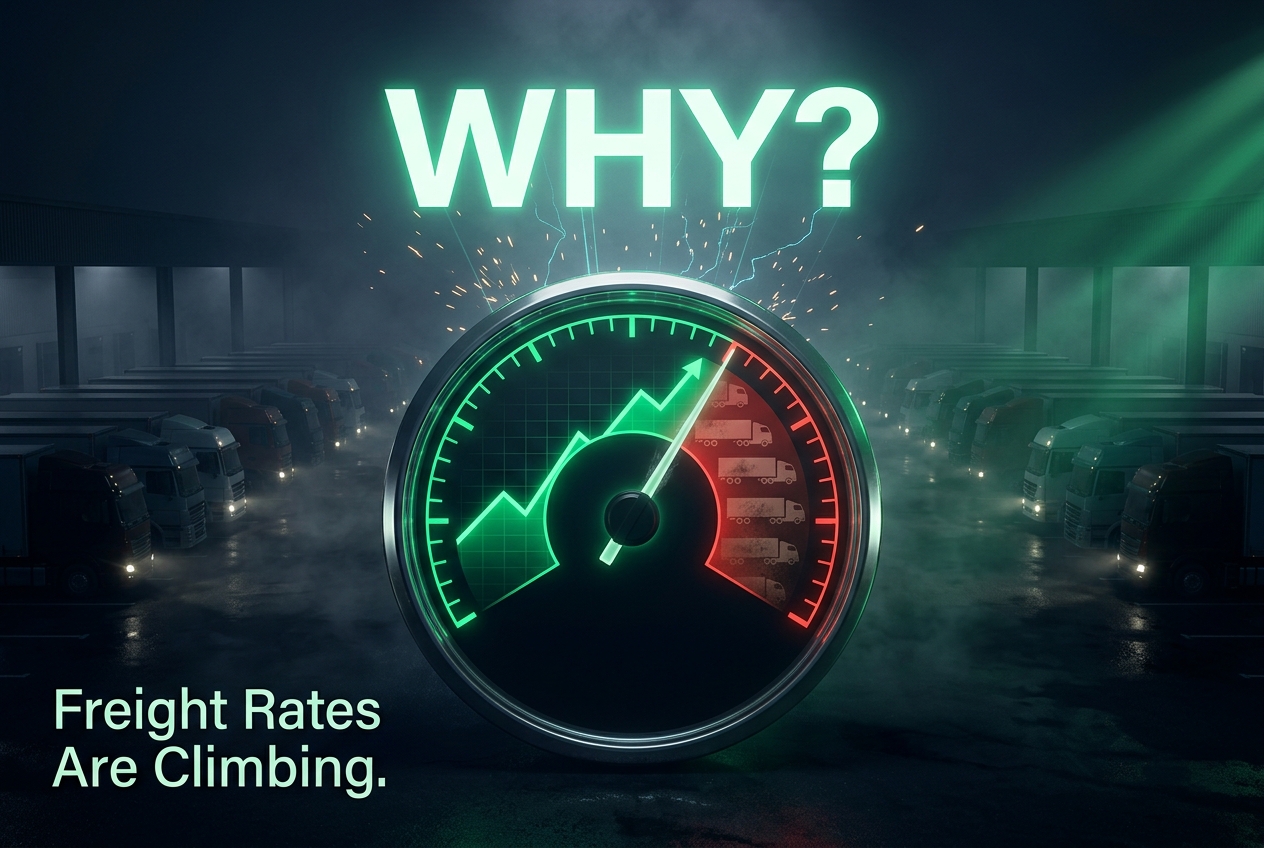
Freight rates are climbing, but per FreightWaves and SAL's analysis, nobody can cleanly determine whether this reflects rising demand or shrinking carrier capacity -- and shippers who price contracts off the rate trend alone risk being blindsided when the true driver reverses.
FreightWaves is asking the question shippers and carriers can't answer cleanly right now: are freight rates rising because demand is actually picking up, or because capacity is quietly leaving the market? The piece doesn't resolve it -- and that ambiguity is the real story.
This is a recurring blind spot in freight markets. Rate signals get read as demand strength when they're often capacity contraction in disguise -- carriers exiting, insurance costs pricing out marginal fleets, drivers aging out, equipment sitting idle because financing dried up. The market has no clean way to distinguish "more freight moving" from "fewer trucks willing to move it," and that confusion has historically preceded both false-alarm bullwhip effects and genuine capacity crunches that catch shippers flat-footed on contracts signed under the wrong assumption.
The SAL read: if you're locking in freight contracts right now, don't price off the rate trend alone -- ask your carrier directly whether they're adding trucks or losing them, because the answer changes whether you're negotiating from strength or about to get squeezed.
Operators who treat freight rates as a single number rather than two competing signals -- demand-side and capacity-side -- are the ones who get blindsided when the trend reverses without warning. Build visibility into carrier capacity now, before the next rate spike forces the question on someone else's timeline.
Frequently asked questions
Why are freight rates rising right now?
Nobody can cleanly answer whether freight rates are rising because demand is picking up or because capacity is quietly leaving the market. FreightWaves raised the question without resolving it, and that unresolved ambiguity is itself the key signal shippers and carriers need to pay attention to.
What's causing capacity to leave the freight market?
Capacity contraction can come from carriers exiting the market, rising insurance costs pricing out marginal fleets, drivers aging out of the workforce, and equipment sitting idle because financing dried up. These factors can make rate increases look like demand strength when they're actually a shrinking supply of willing carriers.
How should shippers negotiate freight contracts given this uncertainty?
Shippers locking in freight contracts should not price off the rate trend alone. Instead, ask carriers directly whether they are adding trucks or losing them, since that answer determines whether a shipper is negotiating from strength or about to get squeezed.
What happens if shippers misread demand-side vs capacity-side rate signals?
Confusing demand strength with capacity contraction has historically preceded false-alarm bullwhip effects and genuine capacity crunches that catch shippers off guard on contracts signed under the wrong assumption. Operators who treat freight rates as a single number instead of two competing signals are the ones blindsided when the trend reverses.
What should freight operators do to prepare for this uncertainty?
Operators should build visibility into carrier capacity now, before the next rate spike forces the question onto someone else's timeline. This means actively distinguishing whether rate changes reflect more freight moving or fewer trucks willing to move it, rather than assuming one cause.
More from SOVEREIGN SIGNAL
- J.B. Hunt Says the Freight Slump Isn't Over — But Rates Are About to Bite AnywayEmpire Logistics
- The UK Just Admitted It's Ukraine's Targeting Arm, Not Just Its ArmoryEmpire Logistics
- Air Force Puts a Second B-52 Back in the Radar-Testing RotationEmpire Logistics
- Houthis Hit Saudi Arabia, Red Sea Traffic Slows AgainEmpire Logistics