J.B. Hunt Says the Freight Slump Isn't Over — But Rates Are About to Bite Anyway
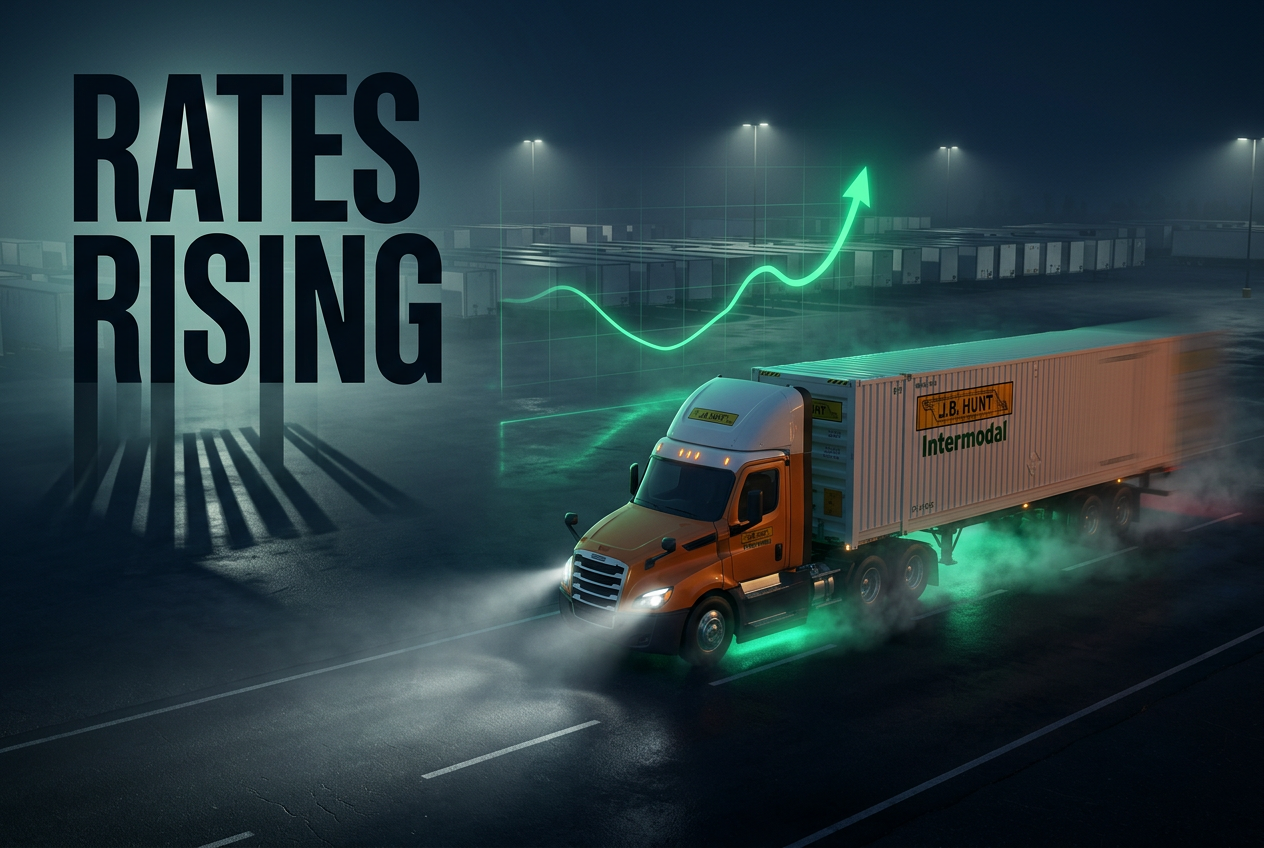
J.B. Hunt, a major freight bellwether, says the freight recession isn't over yet but is signaling that rate hikes are coming as carrier shakeouts thin out competition and shift pricing power back to survivors.
J.B. Hunt, one of the largest trucking and intermodal carriers in North America and a widely watched bellwether for freight demand, is publicly addressing where the ongoing freight recession stands and what rate hikes may be coming next, according to FreightWaves. The company's commentary matters less for its brand name and more for what it represents: J.B. Hunt's volumes and pricing signals tend to move ahead of, not behind, broader shifts in industrial and consumer demand.
Freight has been one of the more reliable early-warning systems in the economy for a reason operators forget until it's too late: trucking capacity gets built for peak demand and then sits stranded when demand normalizes, forcing a slow, painful shakeout of small carriers before rates finally firm back up. That's the cycle playing out now — a prolonged soft patch that's thinned out competitors, followed by the point where surviving large carriers like J.B. Hunt start pushing rate increases because there's simply less capacity left to undercut them. This is the same pattern that preceded past freight recoveries: contraction culls the field, then pricing power returns to whoever's left standing, often before shippers have adjusted their budgets for it.
The SAL read: if your business ships anything by truck, the quiet part of a freight recession is that the rate hikes always arrive faster than your contracts assume — lock in capacity and pricing now, before the recovery you're not yet seeing shows up on your next invoice.
Frequently asked questions
What is J.B. Hunt saying about the freight recession?
J.B. Hunt, one of the largest trucking and intermodal carriers in North America, is publicly addressing where the ongoing freight recession stands and what rate hikes may be coming next, according to FreightWaves. The company is considered a bellwether because its volumes and pricing signals tend to move ahead of broader shifts in industrial and consumer demand, rather than lagging behind them.
Why does J.B. Hunt's commentary matter to shippers?
J.B. Hunt's commentary matters less for its brand name and more for what it represents: its pricing signals tend to move ahead of broader economic demand shifts. That means its statements can act as an early warning for shippers before changes show up in the wider market.
Why do freight rates rise after a freight recession?
Trucking capacity gets built for peak demand and then sits stranded when demand normalizes, forcing a slow, painful shakeout of small carriers before rates finally firm back up. Once the field is thinned out, surviving large carriers like J.B. Hunt start pushing rate increases because there's simply less capacity left to undercut them.
Is this freight rate pattern new?
No, this is the same pattern that has preceded past freight recoveries. Contraction culls the field of smaller carriers first, then pricing power returns to whoever's left standing, often before shippers have adjusted their budgets for it.
What should a business that ships by truck do right now?
According to the article's analysis, the quiet part of a freight recession is that rate hikes always arrive faster than contracts assume. The recommendation is to lock in capacity and pricing now, before the recovery shows up on your next invoice.
More from SOVEREIGN SIGNAL
- Freight Rates Are Climbing -- Nobody Can Agree WhyEmpire Logistics
- The UK Just Admitted It's Ukraine's Targeting Arm, Not Just Its ArmoryEmpire Logistics
- Air Force Puts a Second B-52 Back in the Radar-Testing RotationEmpire Logistics
- Houthis Hit Saudi Arabia, Red Sea Traffic Slows AgainEmpire Logistics